Continuity
What remains recognizable when the body, beliefs, roles, and circumstances keep changing?
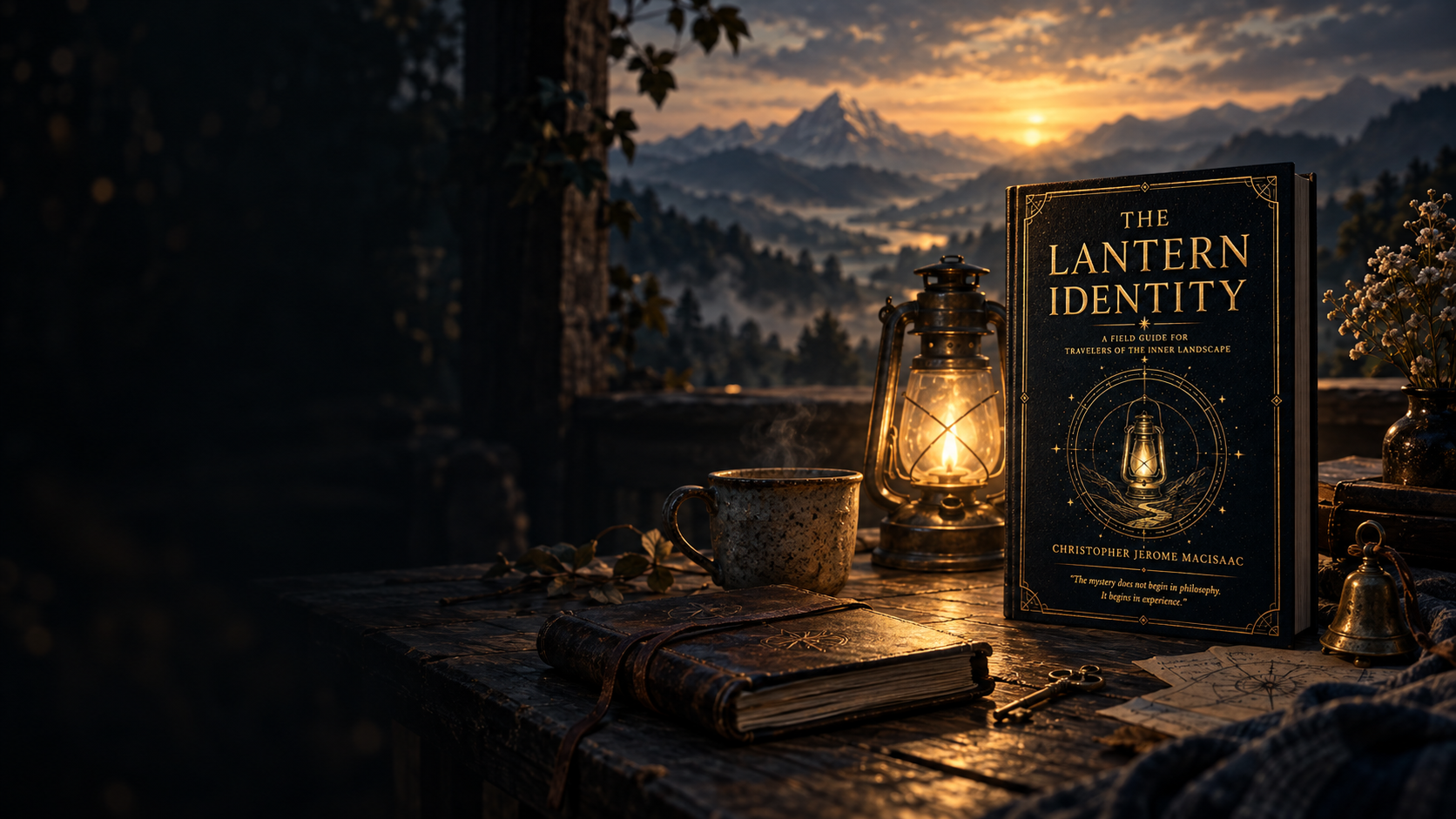
Before content, relationship, action, or pattern, there is distinction. There is experience—and there is the place experience arrives.
Identity is not treated here as a résumé, a personality label, or a single role. It is approached as the boundary and continuity through which experience can be gathered into a particular life.
The mountain asks what remains recognizable through change, how roles can be worn without becoming prisons, and how a Traveler can return to a steadier relationship with the life beneath every passing season.
The manuscript does not reduce Identity to one definition. It approaches the mountain through repeated encounters, each revealing another relationship to continuity, perception, belonging, and change.
What remains recognizable when the body, beliefs, roles, and circumstances keep changing?
The roles are real. None contains the whole. Authenticity becomes the freedom to wear them lightly.
Thoughts, emotions, and inner voices can be noticed. The mountain asks what changes when awareness enters the relationship.
Return is not the discovery of a perfect self, but the recognition of a life that was never entirely lost.
What has been hidden is not automatically shameful. Shadow can contain wounds, defenses, and unlived strengths.
Change does not have to mean disappearance. A living identity can revise, repair, and continue.
Read the opening passage“The mountain is not one tree growing upon it.
The house is not one room.
The sky is not one storm.
And you are not one thought, one feeling, one role, one memory, or one season.”
The larger IHCPP map names five recurring centers of lived experience: Identity, Heartmind, Collection, Power Form, and Personality. The purpose of the map is orientation—not dependence upon the map itself.
Identity comes first because the rest of the landscape requires a location from which experience can be interpreted, remembered, enacted, and patterned.
“Identity is not an object we eventually possess. It is a relationship we continually deepen.”
Publication details will be announced by Inner Order Press. In the meantime, the opening remains available to read without a gate.